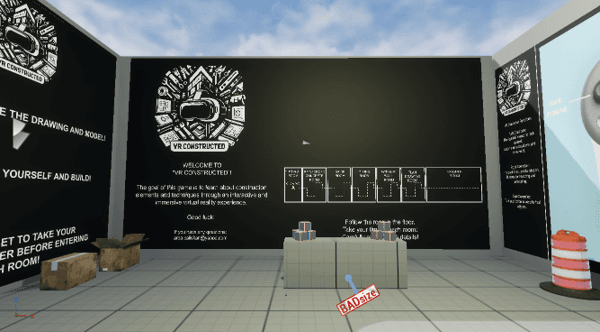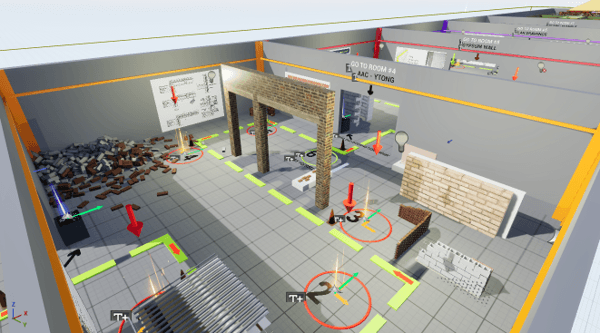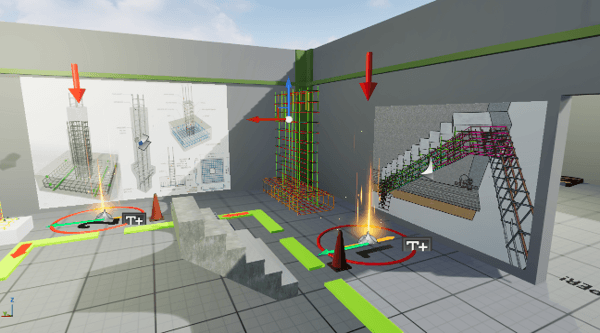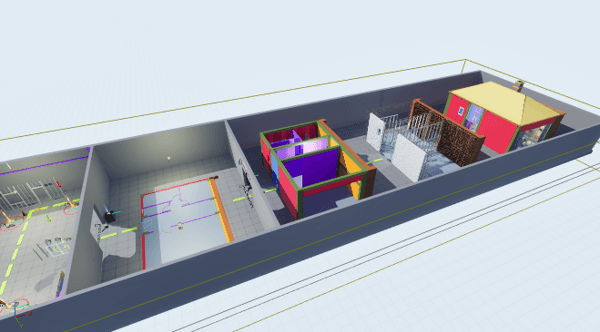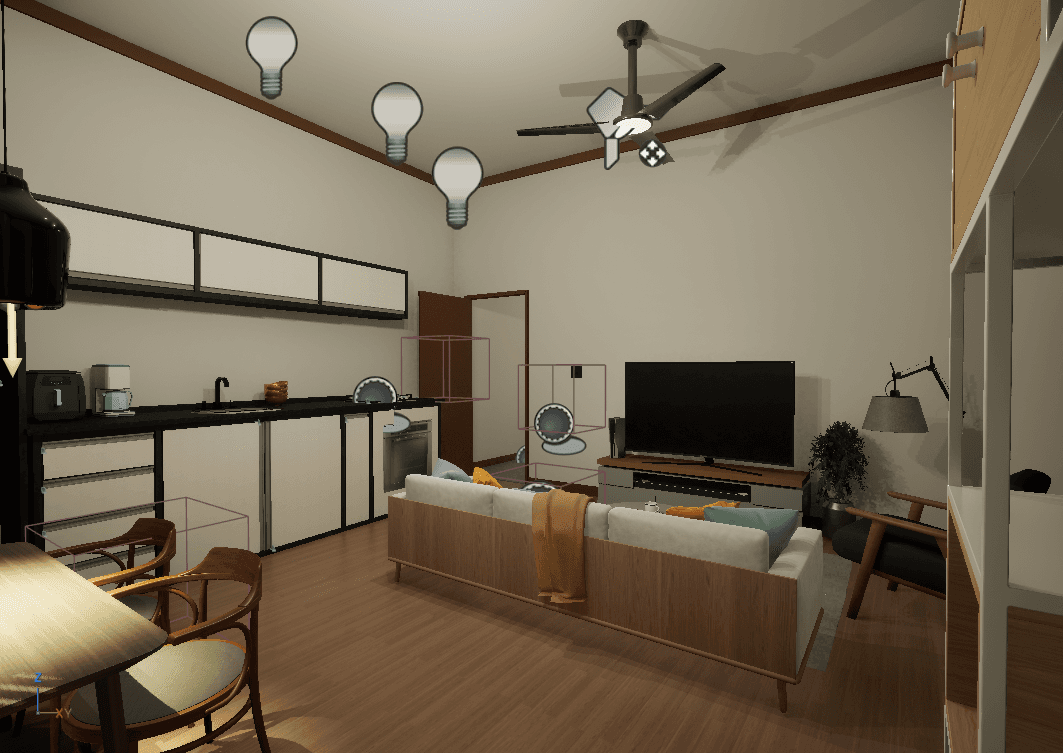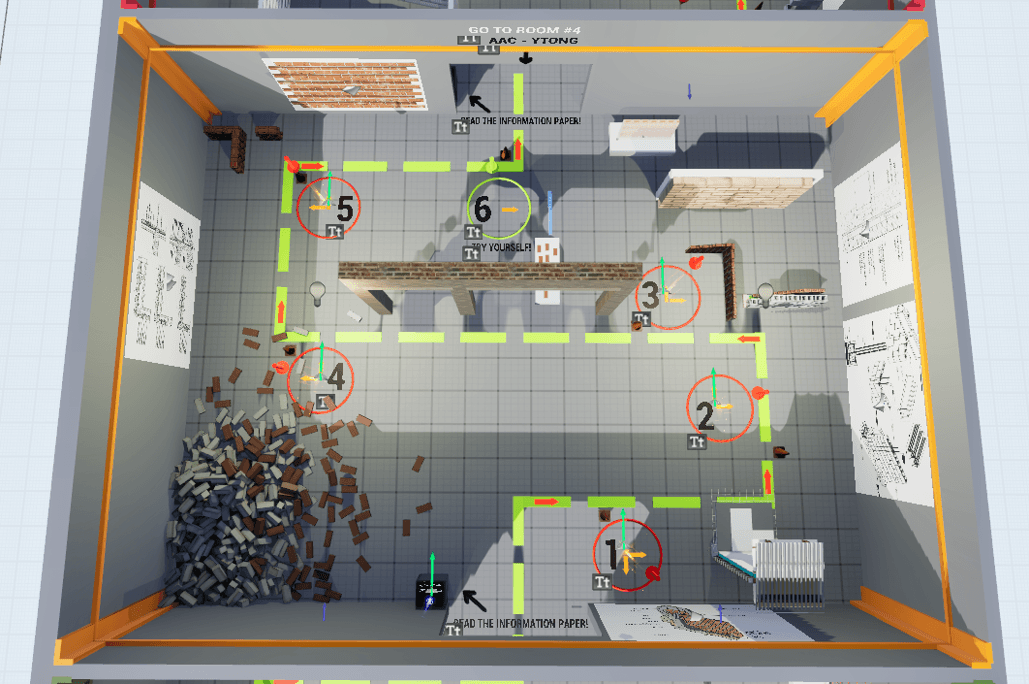
This thesis examines the design, development, and evaluation of a virtual reality learning environment incorporating game-based learning for teaching wall construction systems in interior architecture education. Focusing on four commonly used wall types; reinforced concrete, brick, autoclaved aerated concrete, and gypsum partition systems, the study addresses persistent challenges in construction education related to fragmented technical knowledge delivery and reliance on two-dimensional, image-based instruction.
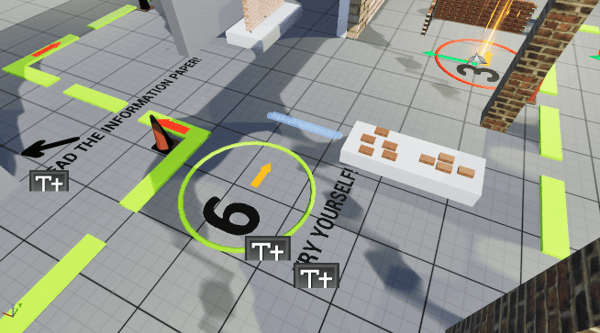
The research adopts a design-based research methodology, through which a VR application, VR ConstructED, was iteratively developed and refined based on pilot studies and user feedback. The system was designed using 3D modeling tools and implemented in Unreal Engine, drawing on constructivist and experiential learning principles to inform interactive exploration of construction logic, sequencing, material properties, details and sustainability issues. A mixed-methods research design was conducted with 30 second-year interior architecture students taking construction-related courses. Quantitative data were collected through pre- and post-tests assessing knowledge of wall systems and post-intervention Likert-scale items, whereas qualitative data were obtained through focus group discussions. In both strands, measurement and questioning were informed by a modified Attitudes Toward Virtual Reality Technology Scale.
Findings revealed heterogeneous learning outcomes: thirteen students demonstrated improved post-test scores, while the remaining participants showed limited or no improvement. In contrast, qualitative results indicated positive perceptions of usability, engagement, and instructional value. In conclusion, rather than positioning VR as a standalone solution, the study frames VR ConstructED as an educational scaffold whose effectiveness depends on pedagogical integration, learner preparedness, and instructional design.